Before You Fall in Love With a Listing, Know What You’ll Need Up Front
The early costs of buying a home in Hampton Roads — and the one big expense you might not have to pay at all
You’ve got your pre-approval. You’re scrolling listings, running numbers, maybe already picturing where the couch goes. And then someone mentions “out-of-pocket costs” and suddenly the math feels a lot more complicated.
Here’s the thing: the early costs of buying a home are real, but they’re also manageable when you know what’s coming. And in today’s Hampton Roads market, one of the biggest expenses on this list — closing costs — is something we’re regularly getting sellers to cover. So let’s actually talk about what you’ll need, when you’ll need it, and how to plan for it.
Earnest money deposit: your first commitment
When you make an offer on a home, you’ll submit an earnest money deposit (EMD) alongside it. Think of it as a good-faith gesture — proof that you’re a serious buyer and not just kicking tires. In Hampton Roads, EMDs typically run between 1% and 3% of the purchase price, though the amount can vary depending on the situation and the seller’s expectations.
This money goes into escrow, not to the seller directly, and it’s applied toward your purchase at closing. It’s not a fee you lose — as long as the contract contingencies are in place and you follow the terms of the agreement. If something comes up during inspection or financing falls through within the right windows, you’re protected. I always make sure my buyers understand exactly what those protection clauses are before we submit anything.

Home inspection: worth every dollar
Once you’re under contract, one of your first moves is scheduling a home inspection. This is your opportunity to understand exactly what you’re buying before you’re legally committed to it — and in my opinion, it’s non-negotiable.
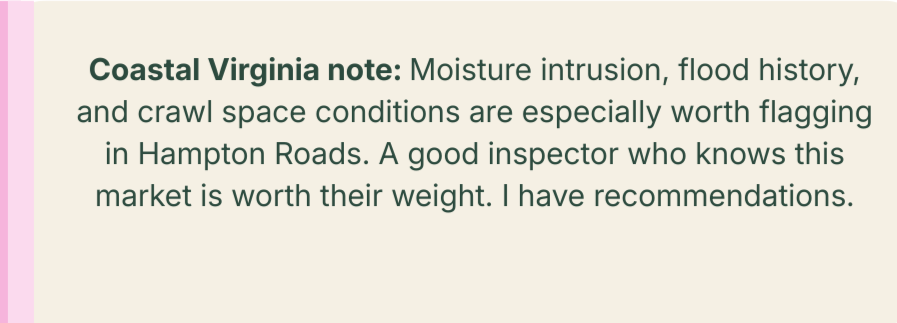
A general home inspection in Hampton Roads typically runs between $400 and $600, depending on the size and age of the property. If the inspector flags anything that warrants a closer look — HVAC, roof, plumbing, electrical, potential moisture issues (especially relevant in coastal Virginia) — specialty inspections can add to that cost. A radon test, a mold evaluation, or a sewer scope might run $100–$300 each.
This is money you spend before you own the home, and it doesn’t come back to you at closing. But what it can do is give you real negotiating power — or save you from a decision you’d regret. Either way, it’s the best investment you’ll make in the process.
Appraisal: required by your lender
If you’re using a mortgage (which most buyers are), your lender will order an appraisal before they finalize your loan. An appraiser visits the property, evaluates it against recent comparable sales, and confirms to your lender that the home is worth what you’ve agreed to pay for it.
Appraisals in the Hampton Roads area generally cost between $400 and $650. This fee is typically paid upfront or rolled into closing costs, depending on your lender, but it’s a cost you’re responsible for regardless of the outcome. If the appraisal comes in low — meaning the value is less than your offer price — that creates a conversation we’ll need to have about next steps. It’s not the end of the world, but it’s something to be prepared for.
Closing costs: the one you might not pay
Closing costs cover a range of charges tied to finalizing your mortgage and transferring ownership — things like title insurance, lender fees, attorney fees, recording fees, and prepaid items like homeowners’ insurance and your first months of property taxes held in escrow. Typically, closing costs run between 2% and 5% of the purchase price. On a $350,000 home, that’s anywhere from $7,000 to $17,500.
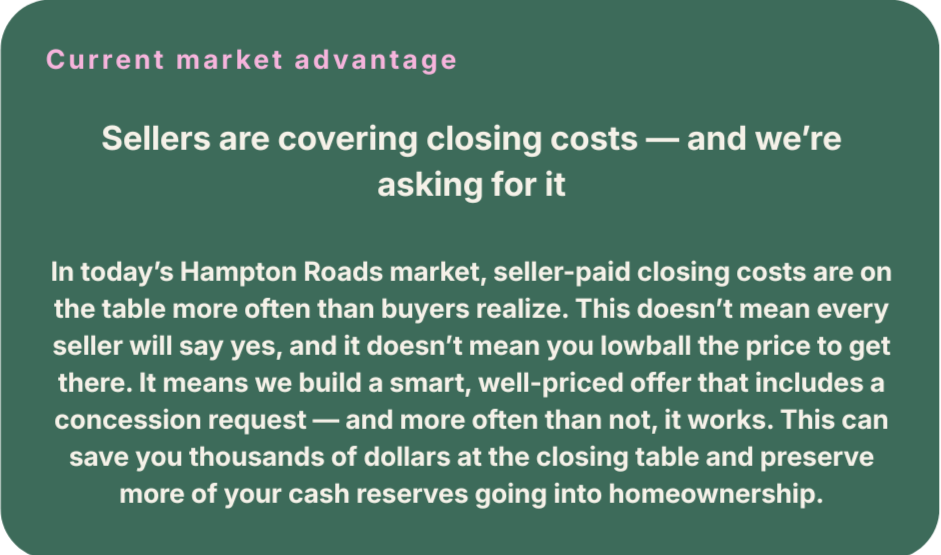
Here’s where the current market actually works in your favor: right now in Hampton Roads, we are regularly negotiating seller-paid closing costs into offers. Sellers are more willing to contribute than they were two or three years ago, and for a prepared buyer with a clean offer, asking for seller concessions is a completely reasonable strategy.

Your hobbies need a home
Let’s map out your real numbers
Every buyer’s situation is different, and the strategy we build around these costs depends on the home, the neighborhood, and what the market is doing right now. I’d rather you know all of this before you fall in love with a listing — not after. Let’s talk.
